Innovate, Include, Impact – Assistive Technology for Resilient Communities
The 2026 Regional Assistive Technology Webinar served as an inclusive continental platform with a strong Southern African perspective, bringing together Organisations of Persons with Disabilities (OPDs), Assistive Technology users, governments, academia, manufacturers, innovators, development partners, humanitarian actors, and policymakers to strengthen collaboration, share promising practices, and elevate advocacy for equitable access to assistive technology. Importantly, the webinar amplified the lived experiences of AT users while promoting locally driven innovation and practical policy solutions to improve access and sustainability of AT systems in Africa.
2026 Regional Assistive Technology Webinar
Webinar Recap
Innovate, include, impact: AT for resilient communities
SAFOD held this webinar on 28 July 2026, as part of the Unlock the Everyday campaign. It built on the 2025 webinar series, going deeper into four themes: the assistive technology ecosystem, education, local manufacturing and climate change.
The event put people who use assistive technology at the heart of the discussion. Sign language interpretation, live chat and polls meant everyone could take part.
What came out of the room
The webinar brought together voices from across the region who:
Explored why the region still depends on donated devices, despite having local skills and materials.
Showed how the right tools and support help disabled learners get a good education.
Presented locally made assistive technology, including adaptive clothing designed with users.
Called for laws and policies that protect access to devices during climate disasters.
Who took part
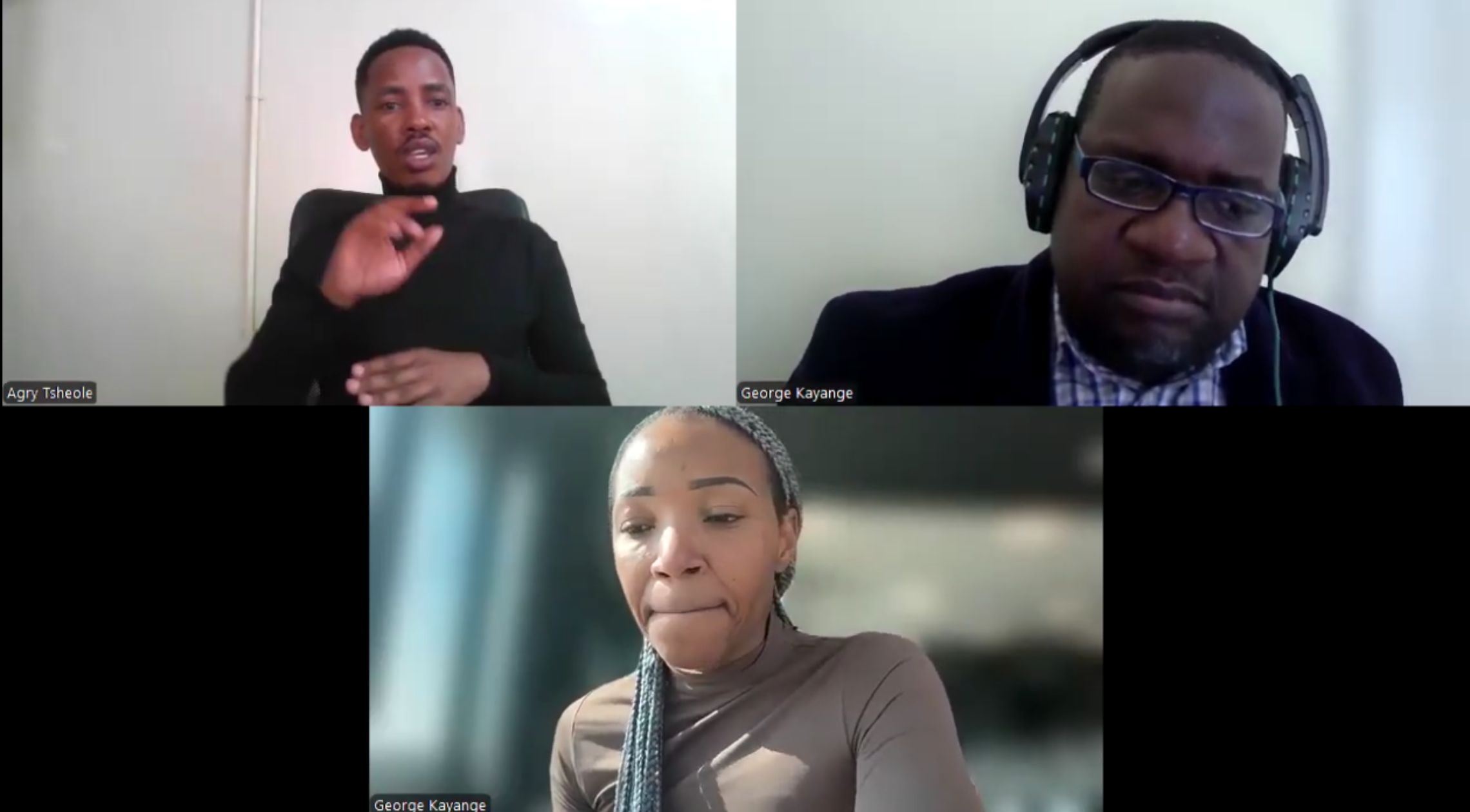
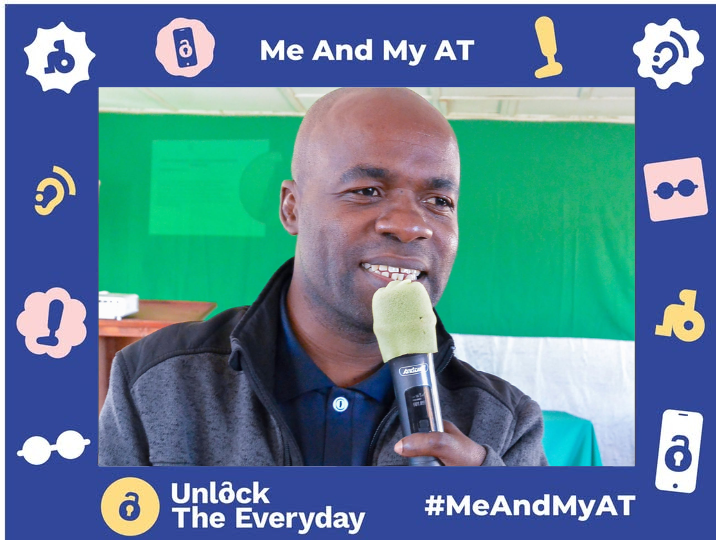
Speakers came from research, disability rights groups, local design and government. Panellists with lived experience of disability shared their own stories too.
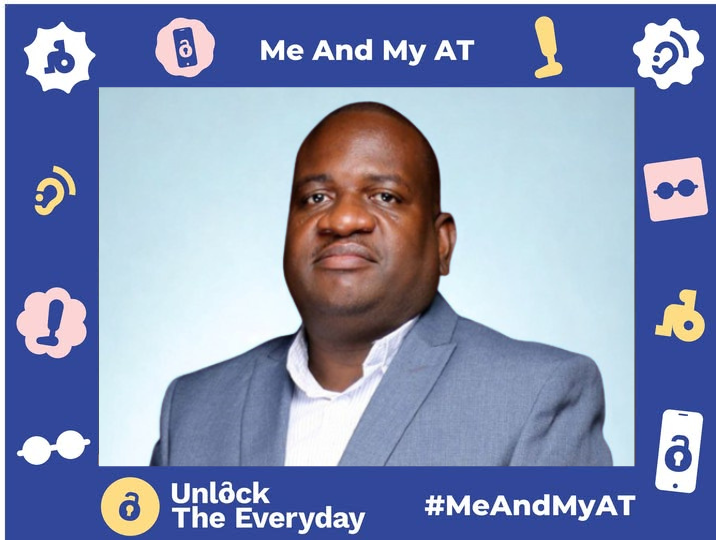
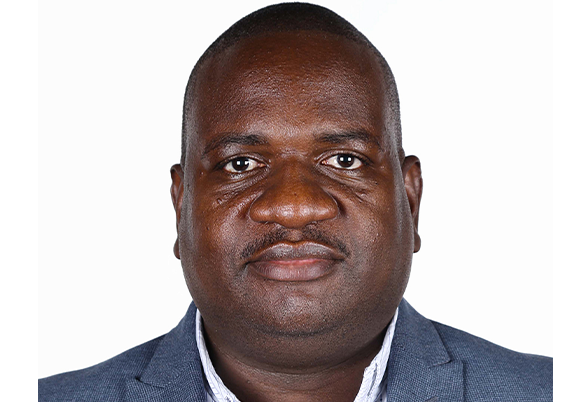
Dr George Mwika Kayange
AT Specialist and Technical Advisor, ATscale (UNOPS).
Bridging the innovation, Investment and Inclusion gap to increase access to Assistive Technology for persons with disabilities
The 2025 Regional Assistive Technology Webinar created an important platform for sharing experiences, highlighting innovations, and calling for stronger policy commitments across the region. It brought together diverse stakeholders to reflect on current progress, identify persistent gaps, and explore practical ways to improve access to assistive technology for persons with disabilities. Through presentations, discussions, and knowledge exchange, the webinar emphasized the need for coordinated action, inclusive planning, and sustained investment to ensure that assistive technology is available, affordable, and responsive to the needs of users.
2025 Regional Assistive Technology Webinar
Webinar Recap
Bridging innovation, investment, and inclusion
The webinar sought to stimulate multi-sector dialogue on bridging the gap among innovation, investment, and inclusion to scale access to assistive technology for persons with disabilities.
This webinar created a platform for sharing experiences, highlighting innovations, and calling for policy commitments. The involvement of AT suppliers and manufacturers was equally critical, as it ensured deliberations and insights into AT availability, affordability, and user-centred design.
What came out of the room
The webinar brought together stakeholders from different backgrounds who:
Shared scalable innovations in assistive technology.
Explored funding models and procurement pathways.
Highlighted policy and regulatory gaps.
Fostered cross-sector collaboration to accelerate access.
Who took part
The targeted speakers and panellists for the webinar consisted of stakeholders from government, organisations of persons with disabilities, AT manufacturers and suppliers, development partners, and academia.
Government
Director of Disability Unit, Ministry of State President
Organisations of Persons with Disabilities
Representing lived experience and community priorities
AT Manufacturers & Suppliers
Insights on availability, affordability, and design
Development Partners
e.g. UNOPS
Academia
e.g. Loughborough University
Want the full story?
Read more about the speakers, agenda, and discussions from the webinar on the campaign site.
Webinar on Assistive Technology Business Innovations
The 2021 Regional Assistive Technology Webinar was held to explore the following question:
How can we leverage business innovations to reach an estimated 85-95% of people with disabilities who need assistive technology (AT) in southern Africa?
2021 Regional Assistive Technology Webinar
How can we leverage business innovations in southern Africa?
The event drew speakers from academia, research institutions, disability organisations, and small and medium-sized assistive technology entrepreneurs. With this list of high-profile speakers and entrepreneurs, we have put together all the speeches and presentations ready for viewing or downloading, from which you can learn emerging trends in assistive technology innovations and entrepreneurships.
In her keynote address, Hon. Manombe-Ncube highlighted the importance of supporting designers and manufacturers in their noble aim to uplift the living standards of people with disabilities.
“We must work strategically and intentionally if we want to make a difference, and I can see that you are already doing so.”
Chairperson of the Southern Africa Federation of the Disabled (SAFOD)
In his welcoming remarks, he emphasized the significance of assistive technologies in enabling productivity, independence, and inclusion of persons with disabilities in the society or community. He said it was, therefore, high time that our policymakers were also well informed about how best to domesticate or implement Article 9 of the Convention 3 which focuses on Accessibility.
Former Director General of the Southern Africa Federation of the Disabled (SAFOD)
His duty was to state and discuss the aim and main objectives of the webinar as follows: to raise awareness of available resources related to business innovations; to provide examples of best practices for sustainable and inclusive businesses, and to identify steps towards the facilitation of resources and training to support sustainable and inclusive business.
She delivered a presentation in which she highlighted that Assistive technology (AT) is crucial for inclusive achievement
of each of the Sustainable Development Goals. Prof Mji said that there is need to develop regional databases to improve access, leverage on partnerships and the need to develop of an AT hub in Africa to increase access.
Kim Viljoen said in her presentation that Mobile phones have the potential to be bespoke and cost-effective tools for persons with disabilities, clustering together multiple assistive technologies in a single device. She pointed out that a disability gap exists in mobile ownership and the gap appears to be more wider in ownership of smartphones.
In his address he shared an overview of SAFOD’s long term vision with regards to assistive technology. According to George’s presentation, he alluded that SAFOD’s overall vision is to act as a holistic advocacy institution for people with disabilities in Southern Africa; provide advice and support across all aspects of everyday living and working, including assistive technology.
He made a presentation about the first rechargeable hearing aid battery developed by Deaftronics. Tendekayi said that the battery is solar powered and can be charged via the sun, house light or cellphone plug. Deaftronics also have an application called DREET a health care program that seeks to break down these barriers to by taking holistic approach to solving the challenges posed.
Lucia Otsetswe is the founder of ATRD a company which developed an application that teaches Botswana sign language called Sign Coach. Sign Coach app was developed mainly to bridge the gap between the hearing and deaf members of the society. Lucia also shared the vision of ATRD which is to promote inclusion, by providing e-content for learners with special educational needs.
She delivered a presentation about an innovative tool for screening hearing impairments using commercially available tablets, headphones, and dedicated software for gaming. Tone Oderud outlined the objectives of this project saying they want to develop affordable screening tools and innovative hearing devices appropriate for children in low-resourced settings.
He spoke about how the Editmicro, a leading supplier of technology solutions in Souther Africa and across the Africa, is impacting the lives of persons with Disabilities particularly in the education sector. It develops alternative and cutting-edge technology for learners of all abilities. Since 1991, it has used technology to aid curriculum delivery.
In her presentation, Deborah Tigere discussed the ear mould lab in Zimbabwe, the challenges faced and as well as advantages. Above all she highlighted the sustainability of this project whereby the income from the lab was used to procure more consumables and replacing broken down equipment – subsidized services, affordable fee structure.
Catherine Holloway’s presentation was titled-“building an assistive technology innovation ecosystem.” She presented about assistive technology, giving a brief introduction of what AT is and discussed Africa’s first assistive technology accelerator program called Innovate Now. She also highlighted the achievements of the program.
In her recorded presentation, Rebecca Matter gave an overview of the challenges in the assistive technology sector in Southern Africa and the some of the innovations for increasing access. Some of the challenges she briefly discussed include the is the inadequate and fragmented funding and investment, the shortage of skilled assistive technology personnel and a weak policy environment.
George Torrens delivered a presentation titled “Supporting sustainable inclusive arts and crafts in Southern Africa” along side Simon Downs from Loughborough University and Timothy whitehead from Aston University. They discussed the Business Integrated Industrial Design Innovation model (BIIDI) and documented key outcomes from a series of sponsored activities with SAFOD.
He delivered a presentation about SAFOD’s Assistive Technology Information Mapping project that was funded by Google under the Google Impact challenge titled “big ideas that will use technology to expand opportunity and independence for people with
disabilities”. He highlighted that collaborations with stakeholders and those who were present at the webinar was crucial.
AT-Info-Map Project Webinar on Assistive Technology
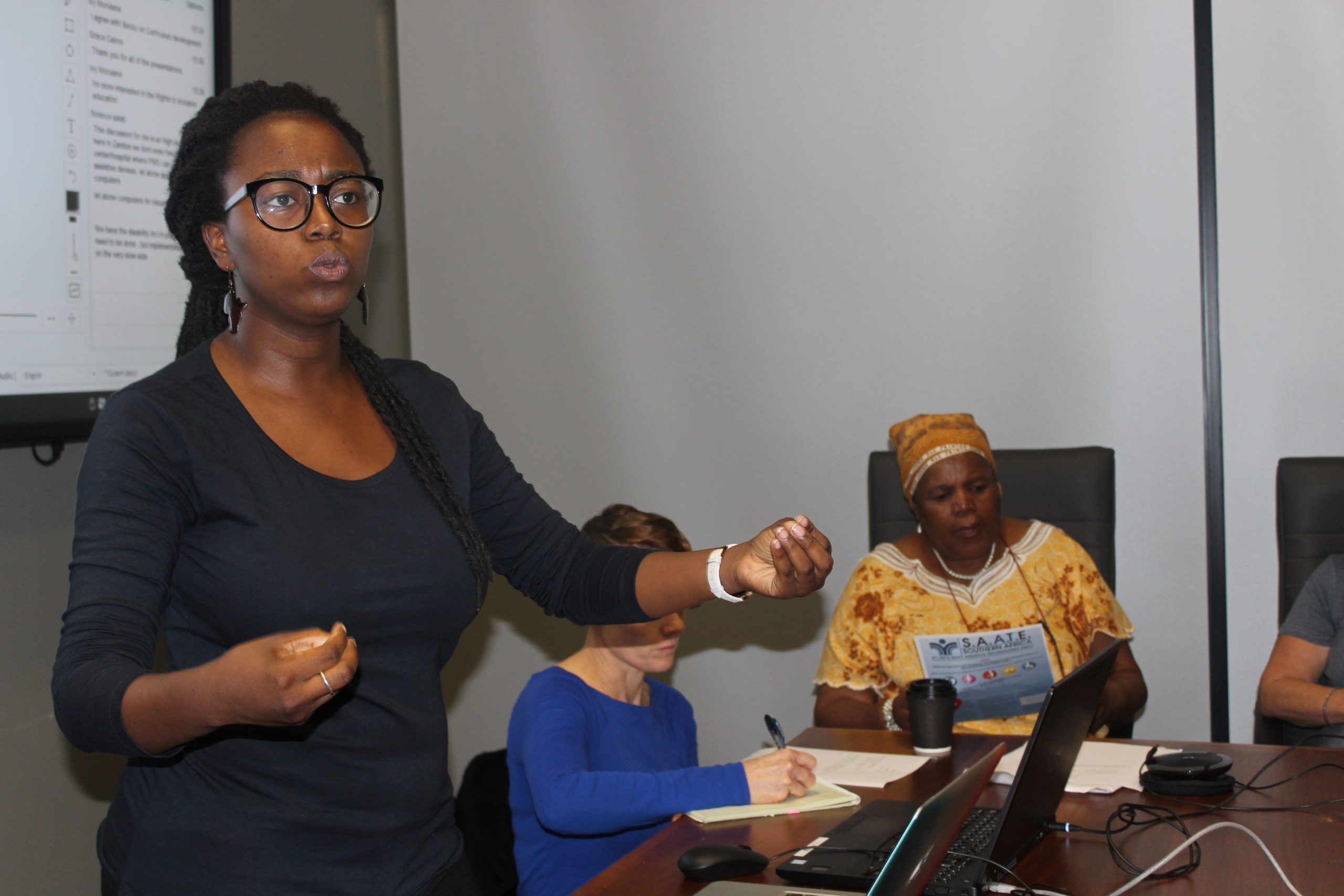
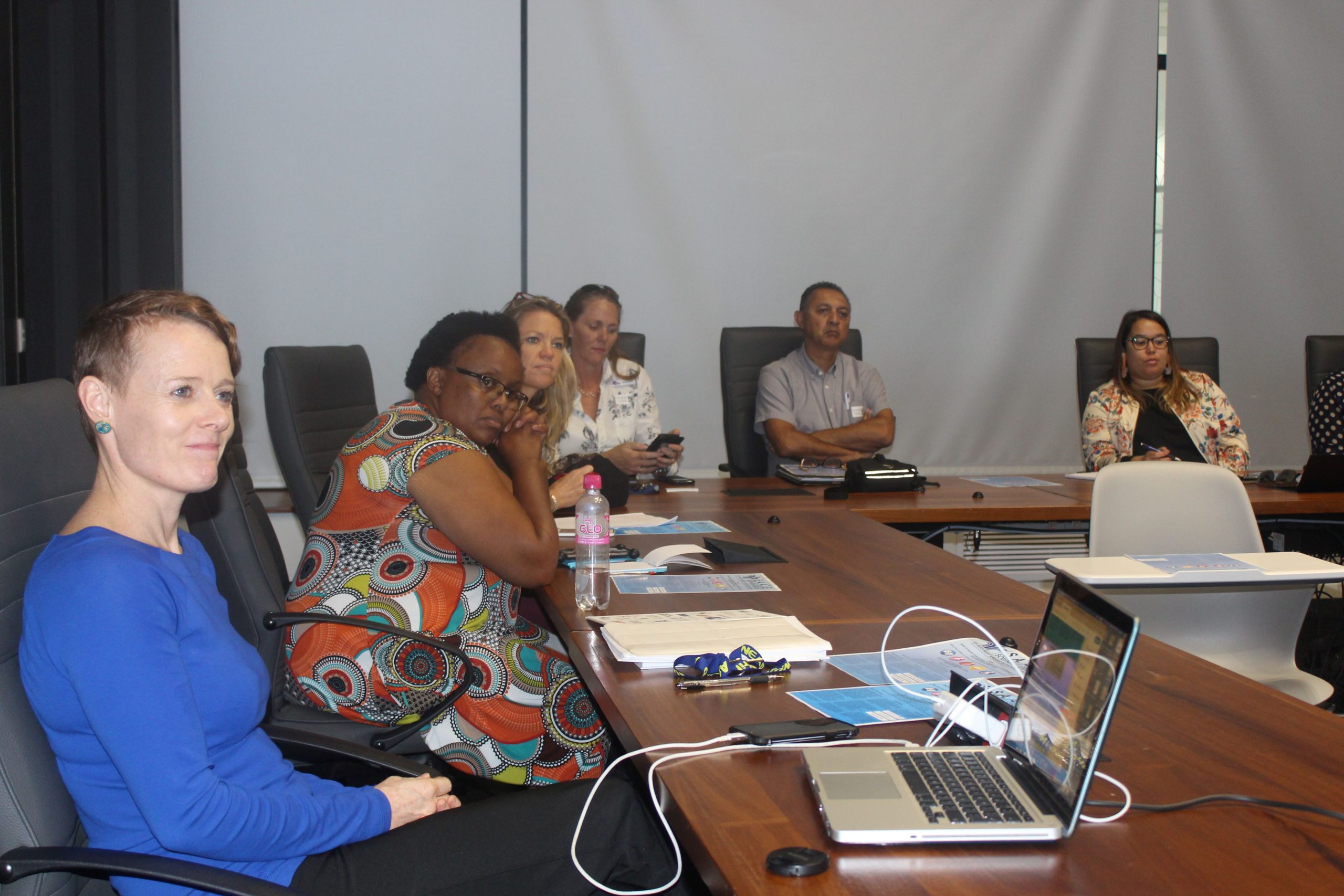
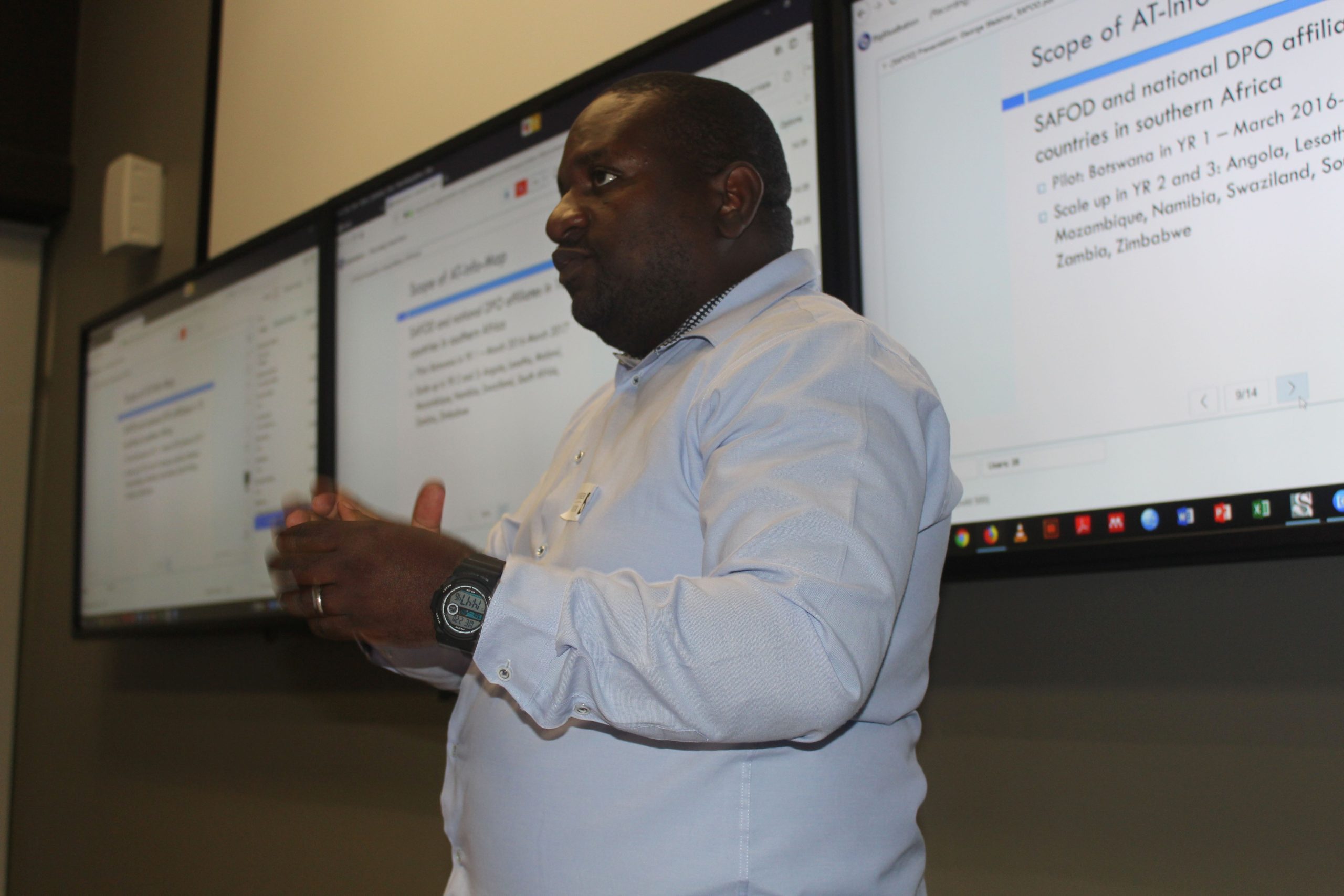
The 2019 Regional Assistive Technology Webinar was hosted at Stellenbosch University in Cape Town, South Africa, by the Southern Africa Federation of the Disabled (SAFOD) in partnership with the University of Washington and AfriNEAD to provide stakeholders with updates on various assistive technology (AT) issues, including the AT situation in Southern Africa; the AT-Info-Map project; and a planning update for a potential regional AT Expo.
Webinar Recap
AT-Info-Map Partners Hold Webinar in South Africa
Representatives of SAFOD, AfriNEAD, and the University of Washington organised a webinar to provide stakeholders with updates on various assistive technology (AT) issues, including the AT situation in Southern Africa, the AT-Info-Map project, and the forthcoming regional AT Expo.
This two-hour webinar, which included a question-and-answer session, was hosted at Stellenbosch University, the home of AfriNEAD.
Three updates on the agenda
The AT situation across Southern Africa.
Progress on the AT-Info-Map project, mobile app, and database.
The forthcoming regional AT Expo.
The conversation behind the webinar
The webinar was held against the background that, during the implementation of the AT-Info-Map project, SAFOD and collaborators had discussed the challenges and potential solutions to increasing AT access with public, private, NGO, and DPO stakeholders across the region. These discussions highlighted the need to explore and interrogate a myriad of topics in order to develop lasting solutions to the whole question of AT access, including:
AT policies
AT regulations
AT financing
This webinar, therefore, sought to build on these AT discussions, with the aim to share knowledge and identify effective strategies for increasing AT access.
App and database, three years in
The AT-Info-Map also developed a mobile app that had undergone various stages of development based on the levels of feedback generated through iterative processes within the first three years the project had been running. As the three-year Google funding was coming to an end on 28 February, the core project partners felt it was pertinent to update stakeholders on the new developments related to the mobile app, as well as the web-based database.
Hosted by
The webinar was organised and hosted by the following partners:
SAFOD
Southern Africa Federation of the Disabled
AfriNEAD
Hosted the webinar at Stellenbosch University
University of Washington
Core AT-Info-Map project partner
Key details
Format
A two-hour webinar, including a question-and-answer session.
Location
Stellenbosch University, the home of AfriNEAD.
Funding milestone
The three-year Google funding cycle for AT-Info-Map closed on 28 February.
List of Speakers & What They Presented
Below is a list of all the presentations during the webinar:
Rebecca Matter
University of Washington/University of Cape Town
The AT situation in Southern Africa and suggested actions and roles of different stakeholders in addressing challenges, including the role of OPDs
An overview of the AT-Info-Map project and how it is seeking to address AT challenges in Southern Africa through a mobile app, website database and awareness initiatives.